
Infrastructure & process
FRP manufacturing infrastructure & fabrication process
Our 60,000 sq ft plant at Kuwadwa, Rajkot houses design, CNC filament winding, contact moulding, quality testing and warehousing under one roof, built for heavy industrial composite work.
- ISO 9001:2008 certified
- Dual-axis CNC filament winding
- 100% FAT, spark and hydro tested
60,000
Sq ft plant
Kuwadwa, Rajkot
Ø4,500 mm
Max mandrel size
Computerized winding
25 kV
Spark testing
100% NDT inspected
23+ yrs
In operation
Since 2003
The plant
One site, from mandrel to trailer.
Every FGP vessel is built at our Kuwadwa, Rajkot plant, opened in 2020.
- Plant
Kuwadwa
Rajkot, Gujarat
- Plant area
60,000sq ft
Single site
- Plant opened
2020
New plant
- In business since
2003
Incorporated in Rajkot
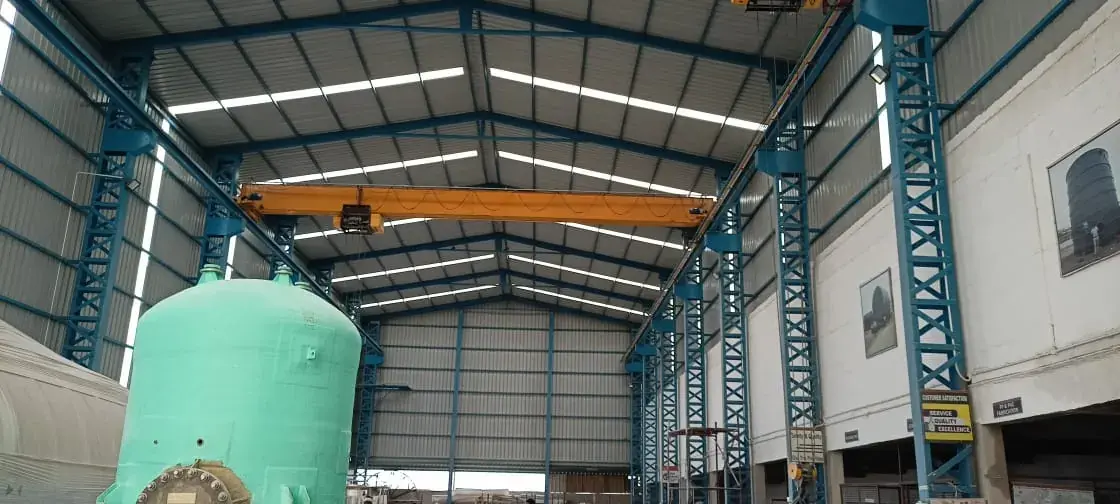
High-bay production hall
Overhead gantry crane runs the length of the hall.
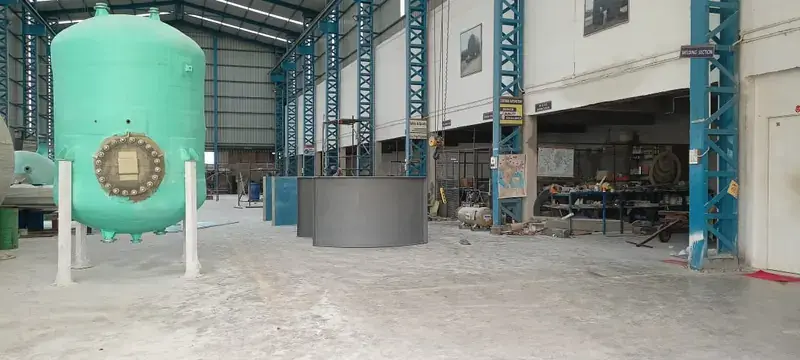
Vessels awaiting dispatch
A vertical pressure vessel with manway beside fabricated tanks.
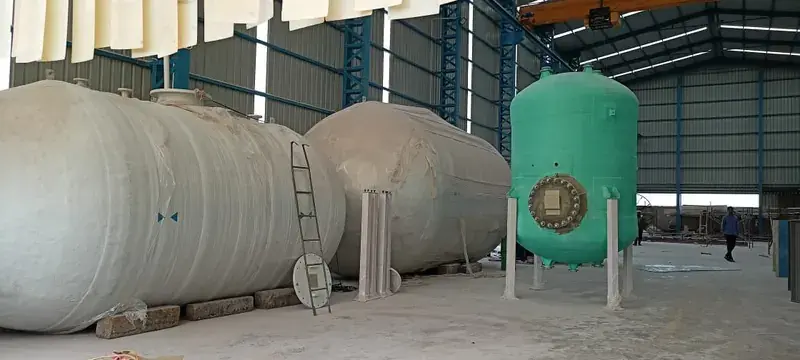
Large horizontal storage tanks
Built and staged indoors before loading.
How we build
Six stages, photographed on our floor.
From the winding line to the leak test: the work that happens between an approved drawing and a loaded trailer.
 01
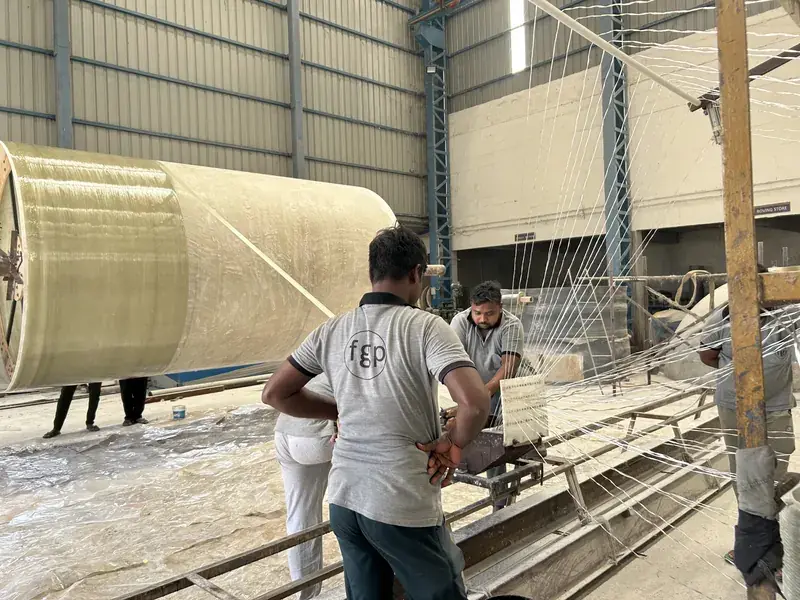
Filament winding
Resin-wet glass roving is wound under tension onto a rotating mandrel to build cylindrical tank and vessel shells.
 02
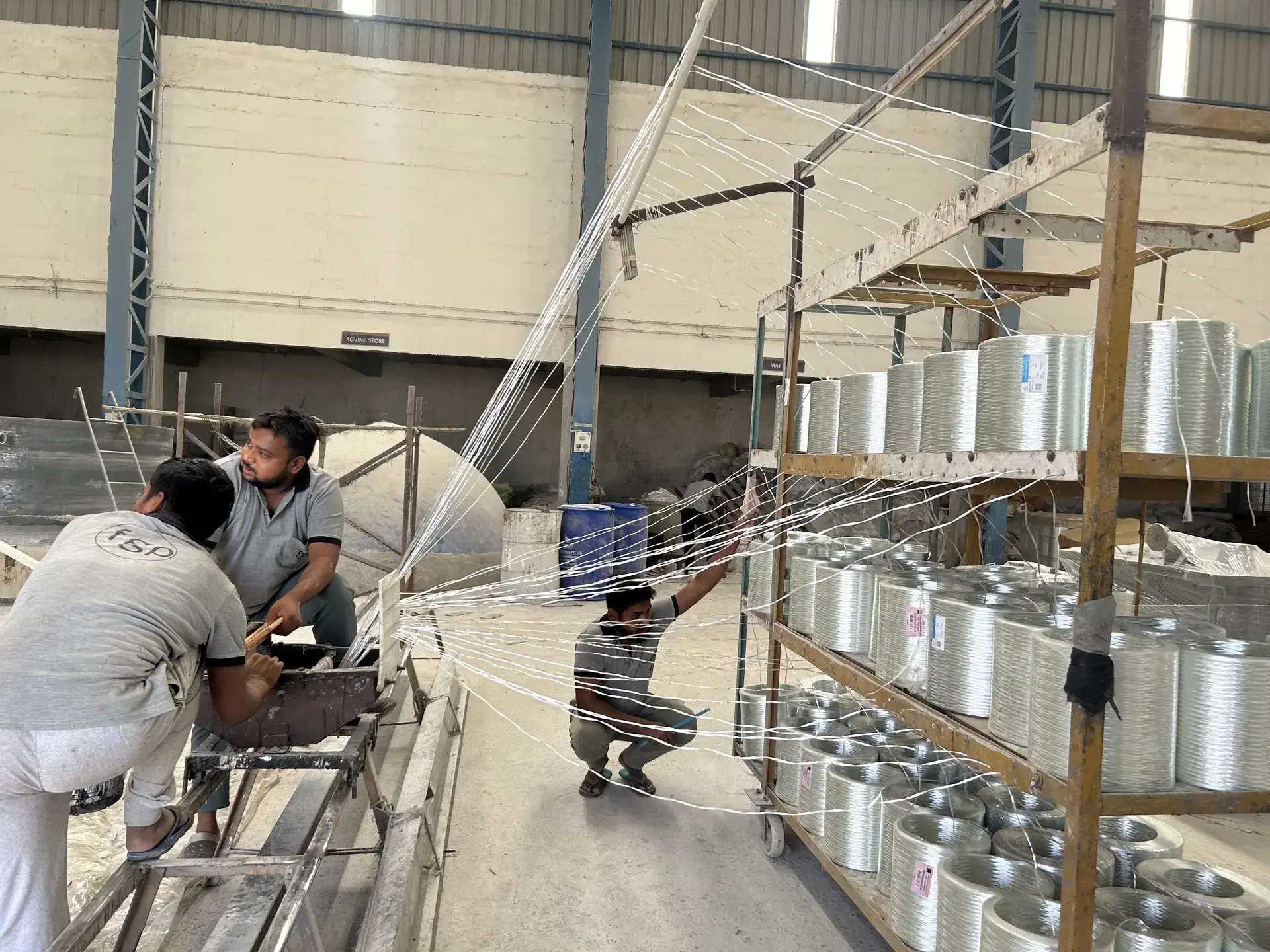
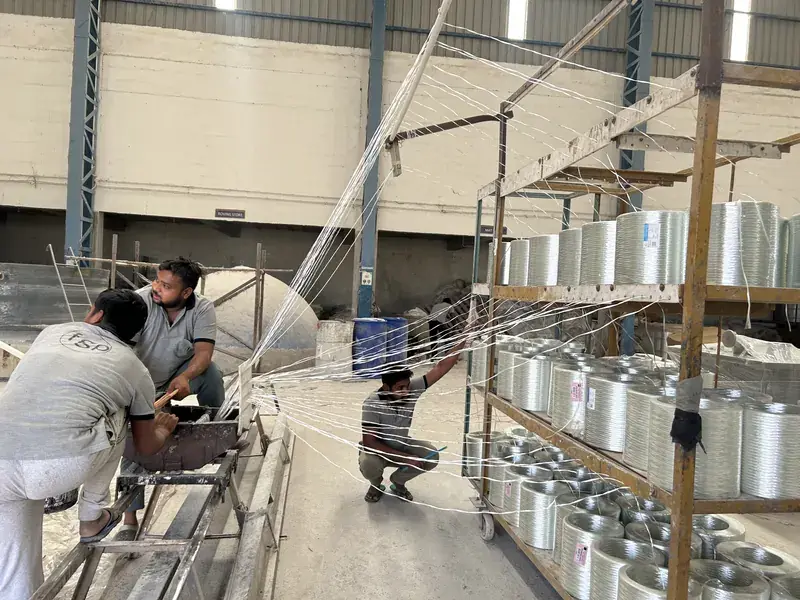
Roving and resin feed
A creel of glass-fibre roving feeds the winding line, with the operator tending the resin bath.
 03
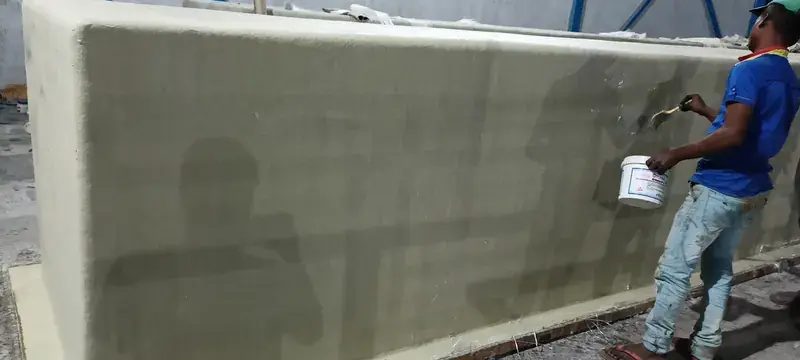
Hand lay-up
Shapes that winding can't reach, such as rectangular tanks, flanges and nozzles, are laminated and finished by hand.
 04
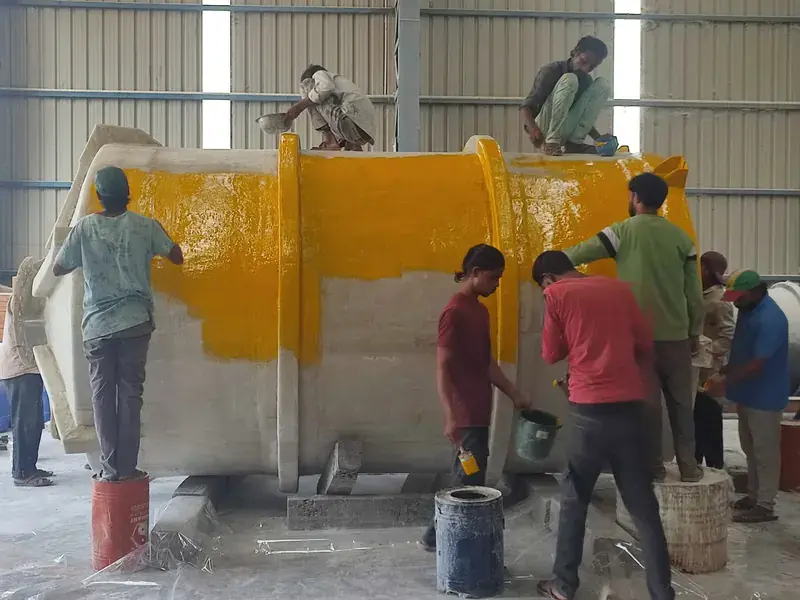
Topcoat
A resin topcoat is applied over the outer laminate once the structural build is complete.
 05
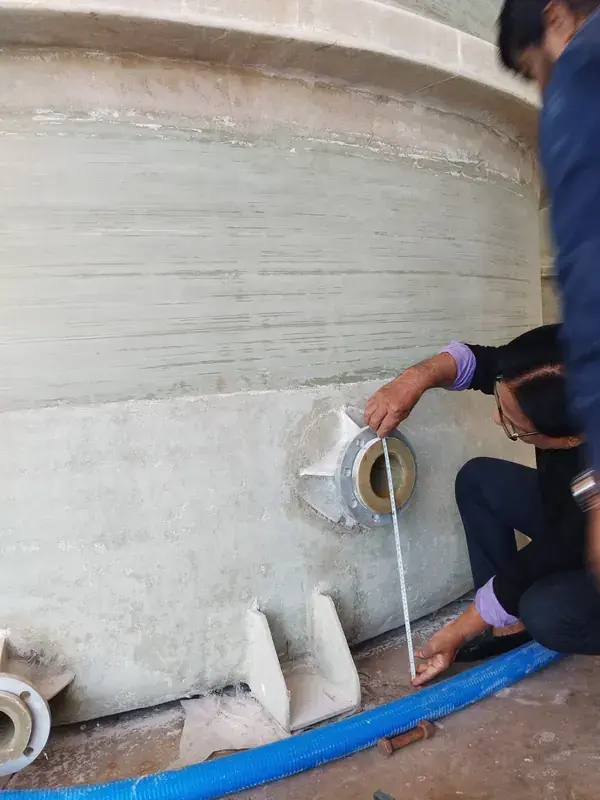
Dimensional checks
Nozzle positions and laminate thickness are measured against the drawing before dispatch.
 06
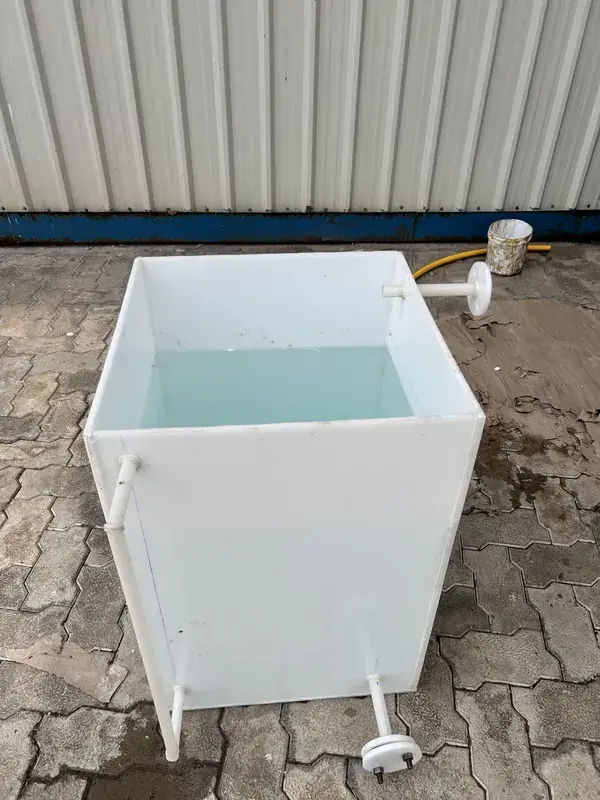
Leak test
Tanks are filled with water and held for a hydrostatic leak test before they leave the plant.
Manufacturing lifecycle
The four checkpoints behind every build
Every vessel passes the same four stages, from chemical review to hydrostatic and spark testing before dispatch.
Application Review
We review the application — chemical exposure, pressure, capacity, and installation constraints — before any material is cut.
Material Selection
Resin system, wall thickness, and construction method are chosen to match the operating envelope, not defaulted to a standard part.
Winding & Lay-Up
The vessel or component is built at our Kuwadwa facility using filament winding and hand lay-up FRP fabrication.
Quality Check
Every unit is checked against our ISO 9001:2008 quality process before dispatch, and field performance feeds back into future builds.
Handling & dispatch
Lifted, strapped and on the road.
Finished equipment is lifted with slings by overhead crane and strapped to trailers at the plant.
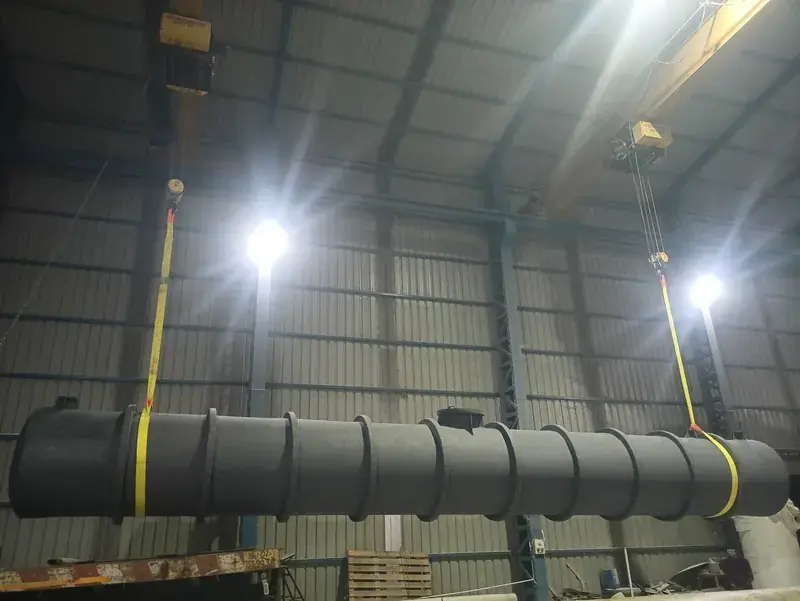
Loaded by overhead crane
A 13 KL underground tank lifted onto a trailer inside the hall.
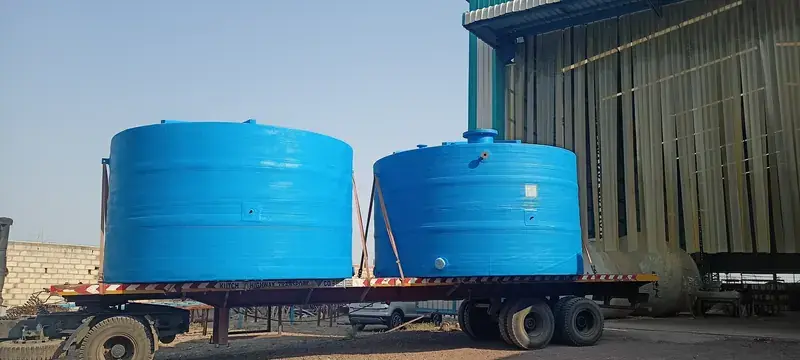
Two 30 KL tanks, one trailer
Storage tanks strapped side by side outside the plant.
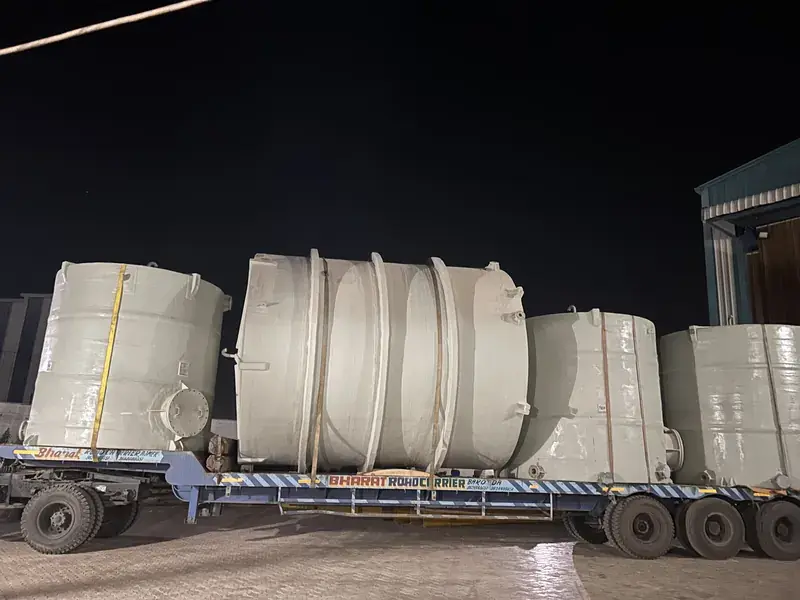
Large tanks, night dispatch
Storage tank shells on low-bed trailers outside the plant.
Project spotlight
A commissioned installation
FGP equipment in service on site.
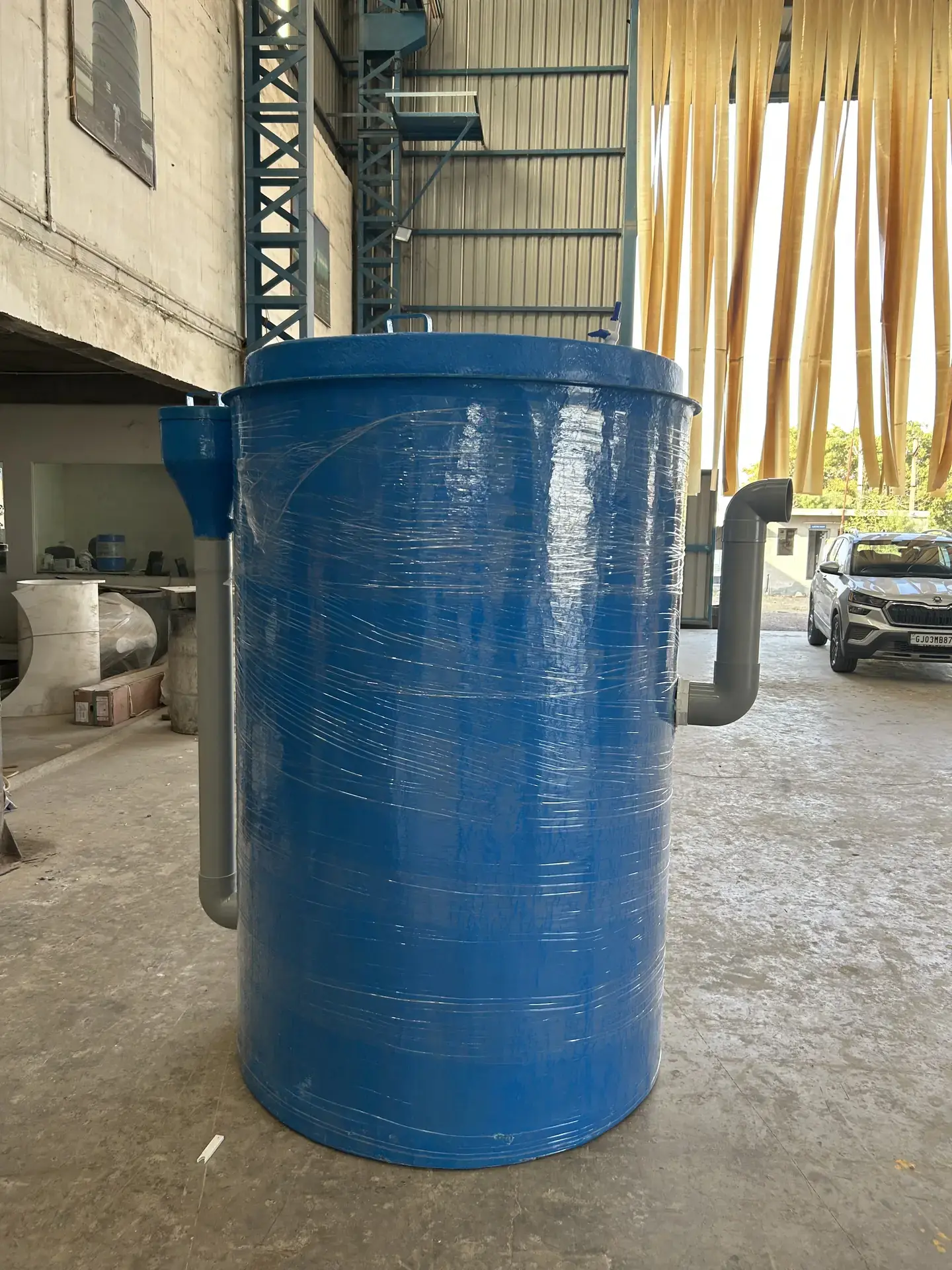
Representative FGP biogas plant, not the Musab site
Musab Food-Waste Biogas Plant
Food waste needed to be converted into usable energy on-site, which meant containing and processing a corrosive, gas-producing process stream that conventional steel equipment degrades under quickly.
Engineered solution
We built the installation on our biogas division's core equipment line — a floating FRP dome to safely collect and store generated gas at variable volume, a high-pressure water jet scrubber to clean the gas stream, and the gas handling components connecting them — all in corrosion-proof composite construction.
Verified result
A working waste-to-energy installation that converts food waste into usable biogas, one of the deployments of the biogas division we have run since 2008.
Accreditation
Compliance & quality standards
We build to international composite fabrication codes.
Get in touch
Ready to manufacture your composite equipment?
Schedule a technical inspection.
Visit our Kuwadwa plant in Rajkot, Gujarat, or submit your engineering specifications for a detailed manufacturing proposal.
Talk to an engineer